
Forest Management in Crow Wing County, MN: Local Guide for Baxter & Brainerd Area Landowners

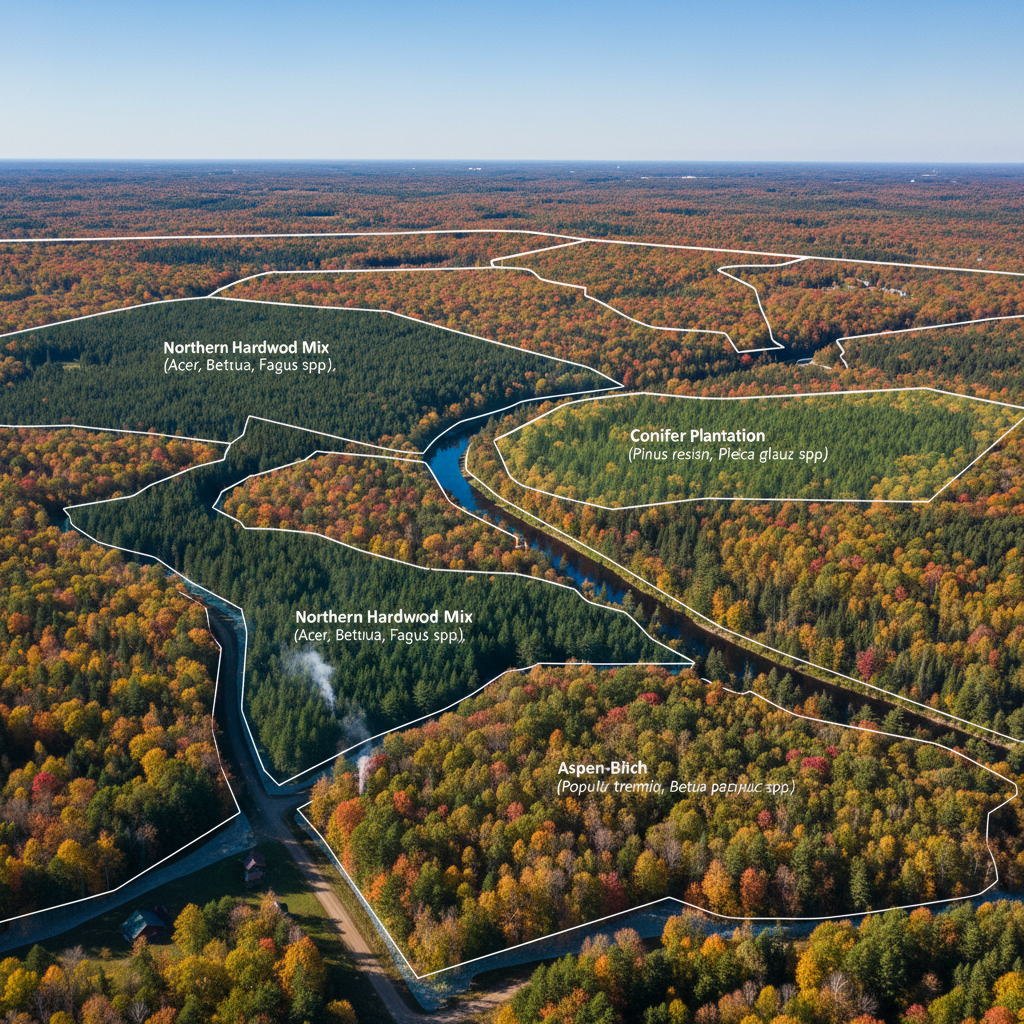
Crow Wing County — home to Baxter, Brainerd, and the Brainerd Lakes region — sits at the ecological transition zone between Minnesota's northern boreal forests and the central hardwood zone. This unique position creates a diverse forest landscape with both valuable conifers and hardwoods, exceptional wildlife habitat, and strong timber markets. If you own forested land in Crow Wing County, here's what you need to know about managing it well.
Crow Wing County's Forest Landscape
Crow Wing County is roughly 60% forested — about 520,000 acres of trees. The county's forest character changes significantly from north to south and east to west:
- •Northern and eastern portions: Classic boreal forest with aspen, birch, balsam fir, black spruce, and jack pine. This is prime timber country with good access to Northern Minnesota pulp mills.
- •Central Crow Wing (Baxter/Brainerd area): Transitional forests with aspen-birch, oak, and red/Norway pine. The mix of species provides both timber value and exceptional wildlife habitat.
- •Southern Crow Wing: More hardwood-dominated — oak, maple, basswood, and ash (now under EAB pressure). Higher-value sawlog timber, especially oak.
- •Lakes and wetlands: Crow Wing County has 400+ lakes and extensive wetland systems. Properties with lake frontage require careful riparian management — but also enjoy exceptional wildlife diversity.
Timber Markets Serving Crow Wing County
Access to strong timber markets is one of Crow Wing County's advantages. Active mills and buyers serving the county include:
- •Pulpwood buyers: Aspen, birch, balsam, and jack pine all find strong markets with regional paper and OSB mills. Demand for pulpwood in Central Minnesota has been relatively stable.
- •Sawlog buyers: Norway pine, white pine, and oak find markets with regional sawmills. Larger-diameter quality logs command significant premiums.
- •Biomass: Low-grade material and tops can be chipped for biomass energy, providing additional value from otherwise low-grade wood.
Crow Wing County Forest Management Opportunities
Aspen Harvest & Regeneration
Aspen is the dominant timber species across much of Crow Wing County. Many stands are now 40–60+ years old — at or past economic maturity. Harvesting these stands now generates income, triggers vigorous natural regeneration (10,000+ sprouts per acre), and creates the dense young growth that deer and grouse need. This is the most common management activity Timberlane Forestry performs in Crow Wing County.
Oak Management
Oak is the high-value hardwood of Crow Wing County. Individual oaks in aspen stands are typically preserved during harvest operations — they provide acorn mast for deer and turkey, and large-diameter oaks carry significant sawlog value. Groups of oak can be managed through selective thinning to accelerate diameter growth.
Critical reminder: Never cut or wound oak trees between April 15 and July 15 in Crow Wing County due to oak wilt risk. All oak work must be scheduled outside this window.
Norway & White Pine Management
Red (Norway) pine plantations are common throughout Crow Wing County — many were planted by landowners 40–70 years ago and are ready for thinning or harvest. These stands benefit from:
- •Thinning: Removing crowded trees improves diameter growth on residual trees and creates more light for understory development.
- •Row thinning or corridor harvesting: Practical method for plantations — removes every third or fourth row, creating income while maintaining stand structure.
- •Final harvest: Mature Norway pine plantations (60+ years) may be ready for complete harvest and natural or replanted regeneration.
SFIA & 2c in Crow Wing County
Both SFIA and 2c Managed Forest Land are available to qualifying Crow Wing County landowners. The county's relatively high property tax rates (compared to some northern counties) make these programs particularly valuable here. Many Baxter and Brainerd area landowners with 20+ acres see substantial annual savings through 2c classification, while those with larger parcels and long-term management goals often benefit most from SFIA.
Timberlane Forestry has helped dozens of Crow Wing County landowners enroll in SFIA and 2c. We write the required DNR-approved Forest Stewardship Plan and handle the enrollment paperwork. Schedule a free walkthrough to find out which program saves you the most.
Wildlife Habitat in Crow Wing County
Crow Wing County supports excellent populations of white-tailed deer, ruffed grouse, wild turkey, black bear, timber wolf, and hundreds of songbird species. The county's mix of lake country, wetlands, and diverse forests creates the habitat complexity that wildlife requires. Active forest management — particularly aspen harvesting for young-growth habitat — can dramatically improve wildlife populations on your property within 2–4 years.
Related Reading
- Aspen Forest Management: Maximizing Regeneration & Wildlife Habitat
- Wildlife Habitat Management for Deer, Grouse & Turkey
- Getting Started with SFIA: Minnesota's Forest Incentive Program
- Minnesota 2c Managed Forest Land Tax Program
- How a Timber Appraisal Works in Minnesota
- Schedule a Free Property Walkthrough in Crow Wing County
Crow Wing County Landowners: Call (218) 232-3055
Timberlane Forestry is based in Baxter, MN. Erik Eggen knows Crow Wing County's forests, mills, and county programs better than anyone.