Creating Perfect Wildlife Habitat: Strategic Forest Management for Deer, Grouse, and Turkey
For many Minnesota landowners, a forest that produces both timber value and abundant wildlife represents the ideal. The good news? These goals aren't mutually exclusive. In fact, the principles of excellent timber management and excellent wildlife habitat management align remarkably well. When you manage your forest with both timber and wildlife in mind, you create a landscape that's healthier, more diverse, more beautiful, and ultimately more valuable.
What Wildlife Really Need
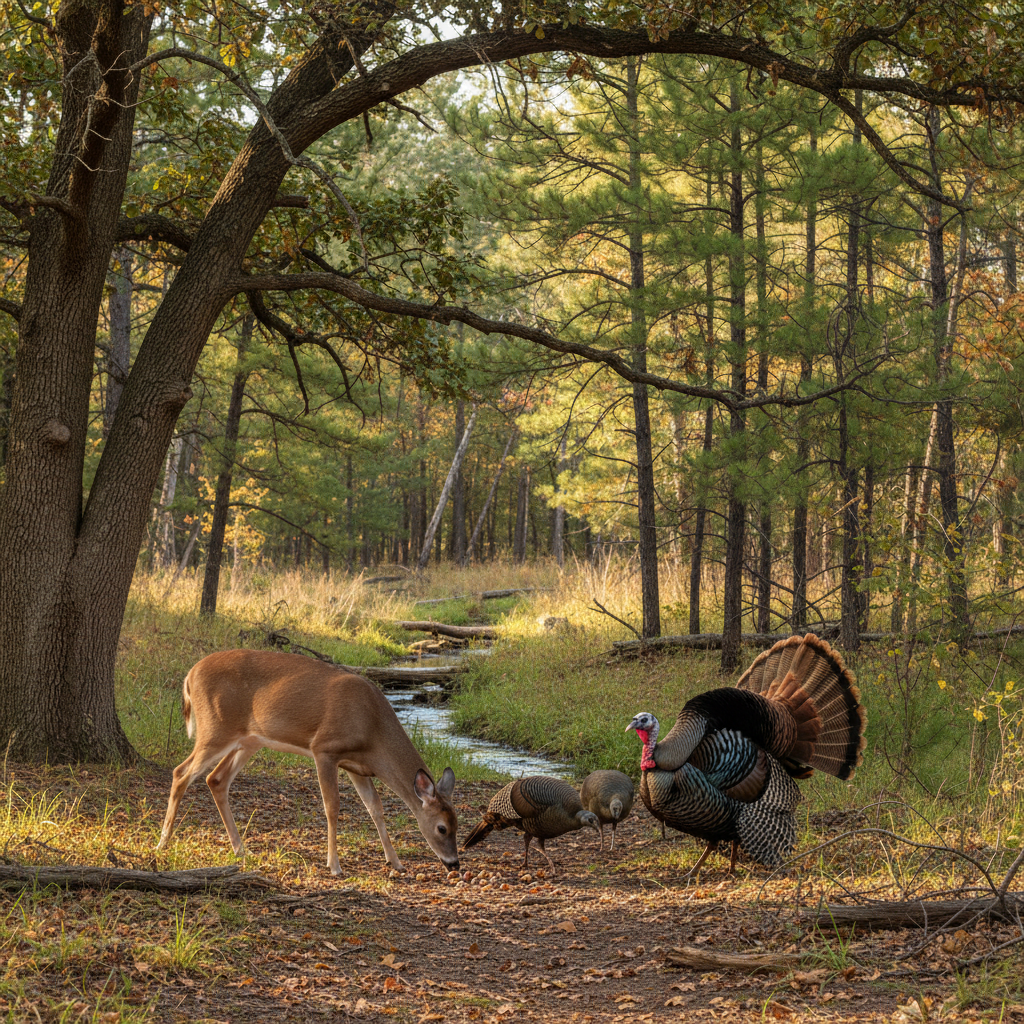
Before we can manage for wildlife, we need to understand what they're actually looking for. White-tailed deer need varied vegetation heights—browse in the understory (young trees, shrubs), overhead cover from mature timber, and food sources year-round. Wild turkeys require similar structure: they forage on the ground for acorns, insects, and seeds, but need dense roosting cover overhead. Ruffed grouse thrive in young forest with dense brush and small trees, using this habitat for cover and drumming areas.
A mature, unmanaged forest—while beautiful—is often poor habitat. The thick canopy shades out understory vegetation, reducing browse and food sources. The uniform age structure offers less structural diversity. Dead wood is cleared out instead of retained. Food sources are limited. Strategic forest management changes this dramatically by creating the layered, diverse structure that wildlife thrive in.
Strategic Harvesting Creates Habitat
This is where selective timber harvesting becomes wildlife management. By carefully removing mature trees, we open the canopy and let sunlight reach the forest floor. That sunlight triggers the germination and growth of oak seedlings, berry-producing shrubs, and browse species that deer depend on. The diversity of tree ages—some mature, some regenerating, some in between—creates the multi-layered habitat structure that all forest wildlife need.
We strategically retain and create snags (standing dead trees) for cavity-nesting birds and woodpeckers. We leave den trees—trees with natural cavities or hollow sections—that provide denning sites for raccoons, porcupines, and other species. We thin dense young growth to create travel corridors and feeding opportunities. Every management decision considers its habitat value, not just its timber value.
Food Plot Integration and Native Browse Enhancement
Many landowners think about food plots as separate from forest management, but the best approach integrates them. We identify natural clearings and harvest openings where food plots can be established without clearing additional forest. We design plot locations and sizes based on wildlife movement patterns and forest structure. Native species like clover, chicory, and browse-friendly plants are incorporated into harvest plans where they'll thrive in the newly opened canopy.
Beyond food plots, we enhance native browse through targeted harvesting. Oak regeneration through overstory removal creates continuous mast production. Removal of competing vegetation allows preferred browse species to flourish. We work with DNR habitat programs when available to augment our private management with public resources and expertise.
Creating Edge Habitat and Openings
Wildlife thrive in edge habitat—areas where different vegetation types meet. A strategic harvest creates numerous edges: the transition from newly opened areas to residual forest, from food plots to timber, from young regenerating growth to mature stands. These edges are high-value wildlife zones. Strategic road and trail creation—planned as part of the timber harvest—creates additional edge that improves both access for you and habitat quality for wildlife.
Grouse and woodcock specifically depend on young forest habitat. When you harvest an area and allow it to regenerate naturally or with strategic planting, you're creating ideal grouse cover for the next 15-20 years. Retaining some larger trees in these areas provides roosting and shelter cover. The result is self-sustaining habitat that requires minimal ongoing work.
The Long-Term Vision
Great wildlife habitat isn't created overnight—it's built through thoughtful, long-term forest management. We develop 10-year stewardship plans that phase management activities across your property, creating a mosaic of different age classes and habitat types. Young forest habitat in one area, while mature timber regenerates in another. Food plots in strategic locations. Snag and den tree retention throughout. This diversity supports more wildlife species and creates a more resilient, beautiful landscape.
The beauty of this approach is that it aligns with sound forest management and timber economics. You're not sacrificing timber value for wildlife—you're creating habitat while managing for timber. Your forest becomes more valuable ecologically, recreationally, and financially. Wildlife populations respond quickly to these management improvements, and the diversity and abundance you see can be remarkable within just a few years.
Get Started with Wildlife Habitat Management in Northern MN
If you want your Crow Wing, Pine, or Cass County forest to support robust populations of deer, grouse, turkey, and other species, call Erik Eggen at Timberlane Forestry. The first step is a free property walkthrough — we assess current habitat, discuss your wildlife goals, and show you exactly how timber management and habitat management work together. No cost, no obligation.
Related reading: Selective Timber Harvesting · Wildlife Food Plots in Minnesota · Wildlife Habitat Services
Schedule a Free Wildlife Habitat Consultation — (218) 232-3055
Talk directly with Erik Eggen about improving deer, grouse, and turkey habitat on your Minnesota forest property.
Schedule Your Free Consultation