Selective Timber Harvesting: Generating Income While Regenerating Your Forest
For many Minnesota forest landowners, timber is an underutilized asset. Your forest has been growing for decades, steadily accumulating value—but without the right management strategy, that value remains locked away. This is where selective timber harvesting comes in. Unlike clearcuts that strip entire areas bare, selective harvesting is a thoughtful, economically sound approach that generates immediate income while actually improving your forest's long-term health and value.
Understanding Selective Harvesting
Selective harvesting—sometimes called variable retention harvesting—is the practice of carefully choosing which trees to remove based on multiple factors: species, age, health, diameter, and your management goals. Rather than harvesting all merchantable timber indiscriminately, a good forester uses professional judgment to identify trees that are ready for harvest while leaving a diverse forest structure behind. This approach aligns with sustainable forestry principles and is the foundation of sound land management.
When done properly, a selective harvest removes mature, larger diameter trees while preserving younger, healthier specimens and maintaining good species diversity. This creates a forest that's actually more resilient, more beautiful, and more valuable after the harvest than it was before. The remaining stand continues growing, wildlife habitat is preserved and often enhanced, and the forest regenerates naturally or with strategic planting.
Why Selective Harvesting Makes Sense Financially
Let's talk about the financial reality. If you own 100 acres of mature forest in Minnesota, you likely have significant timber value standing on your property. A clearcut approach maximizes short-term revenue but decimates the land's ecosystem, requires expensive site preparation, and can take 40+ years to recover. Selective harvesting, by contrast, generates steady income over time while the forest continues to grow and improve.
Consider this: a well-managed forest can sustain periodic harvests every 10-15 years, continuously providing revenue while maintaining its ecological and recreational value. Professional timber appraisals ensure you're getting fair market value for what you harvest. We work exclusively with MLEP-certified logging contractors who understand the nuances of selective work and leave your forest clean and well-managed. No slash piles, no damage to residual trees, no environmental shortcuts.
The Hidden Benefits Beyond Income
Beyond the immediate revenue, selective harvesting delivers profound ecosystem benefits. Opening the canopy through careful timber removal allows sunlight to reach the forest floor, stimulating the growth of native understory plants and creating diverse vegetation layers. This diversity is exactly what wildlife needs: deer benefit from improved browse, grouse and woodcock gain early successional habitat, and cavity-nesting birds appreciate the snags and den trees we intentionally retain.
A strategically harvested forest is also more resilient to pests, disease, and wildfire. Trees that were crowded before harvest now have more space, reducing competition for water and nutrients. Air circulation improves, lowering disease pressure. The younger residual forest regenerates quickly and densely, naturally suppressing undesirable species while promoting the establishment of oaks, pines, and other valuable timber species.
Our Approach to Selective Harvesting
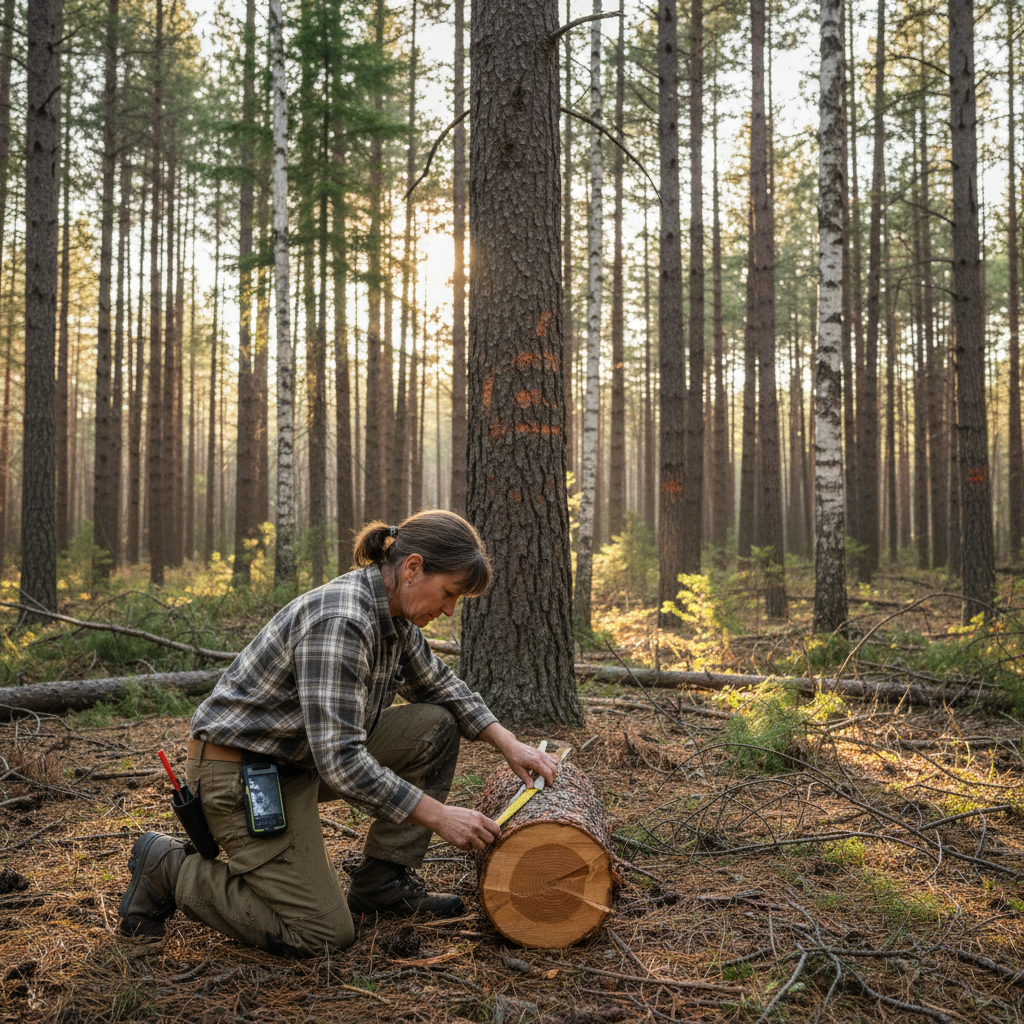
At Timberlane Forestry, we combine 35+ years of on-the-ground experience with cutting-edge planning tools. Before a single tree falls, we conduct a detailed timber inventory and stand analysis. We map your property with aerial photography and GPS, identifying optimal harvest zones and access routes. We create a detailed harvest plan that aligns with your goals, whether that's maximizing income, enhancing wildlife habitat, improving forest health, or some combination.
We provide professional timber appraisals based on current market data, ensuring you understand the value of what's being harvested. We handle all logistics—surveying, permitting, contractor coordination—so you don't have to. And we oversee the harvest itself, making sure it's executed exactly as planned. Most importantly, we leave your forest better than we found it: cleaner, healthier, more diverse, and ready for continued growth and future harvests.
Getting Started with Your Timber Harvest in Baxter, Brainerd & Northern MN
If you've been wondering whether your Minnesota forest is ready for a selective harvest, the answer is probably yes. The first step is a free property walkthrough and timber assessment with Erik Eggen — certified forester in Baxter, MN. We'll discuss your goals, explain your options, show you what a responsible harvest looks like, and give you a clear picture of potential income. No pressure, no obligation.
Selective timber harvesting is a time-tested, ecologically sound strategy for Crow Wing, Pine, Cass, and Kanabec County landowners who want to generate income while preserving their land's future value. Whether you want to fund a project, create wildlife habitat, improve forest health, or simply see what your timber is worth — we're here every step of the way.
Also explore: When to Harvest Timber in Minnesota · Benefits of Selective Harvesting · SFIA & 2c Tax Savings
Schedule a Free Timber Consultation — Call (218) 232-3055
Talk directly with Erik Eggen about your forest and selective harvesting options. Serving Baxter, Brainerd, and Northern Minnesota.
Schedule Your Free Consultation