Buying Wooded Land in Minnesota: A Certified Forester's Evaluation Guide

Purchasing forested land in Minnesota is one of the best investments a landowner can make — if they know what to look for. But wooded property is also one of the easiest investments to get wrong. Without a professional forest evaluation before purchase, buyers routinely overpay for timber-depleted land, underestimate management costs, or miss serious forest health problems that affect the property's long-term value. This guide walks you through what a certified forester looks at when evaluating forested property in Minnesota.
1. Timber Species & Age Class Composition
The species and age structure of a forest are its most fundamental value factors. A forester evaluates:
- •Dominant species: Oak, Norway pine, and white pine are the highest-value timber species in Minnesota. Aspen and birch have moderate timber value but excellent wildlife habitat value. Balsam fir has lower timber value but important ecological function.
- •Age class diversity: A forest with multiple age classes (young, middle-aged, and mature stands) is more resilient and provides more diverse habitat than an even-aged monoculture.
- •Recent harvest history: Was the property recently high-graded (best trees removed, low-quality trees left)? High-grading leaves behind degraded genetic stock and is a red flag.
- •Merchantable volume: How much timber is available for near-term harvest versus long-term growing stock? This affects both immediate income potential and long-term management costs.
2. Forest Health & Disease Assessment
A healthy-looking forest from the road can hide serious problems. A professional walkthrough evaluates:
- •Emerald ash borer (EAB): Are there ash trees present? If so, assume EAB will arrive (or is already present). Factor ash salvage harvesting into your purchase decision and budget.
- •Oak wilt: Any expanding pockets of dead red oaks? Confirm diagnosis before purchase — treating established oak wilt centers is expensive.
- •Aspen heart rot: How old are the aspen stands? Heart rot incidence increases dramatically in stands over 60 years. A cruise can estimate rot percentage.
- •Invasive plants: Buckthorn, barberry, garlic mustard — these cost money to manage and can limit forest regeneration.
- •Storm damage: Recent blowdowns, ice storm damage, or drought stress visible in the canopy?
3. Access, Roads & Infrastructure
Forest management requires access. Before buying, evaluate:
- •Legal road access: Does the property have a deeded easement to a public road, or is access dependent on a neighbor's goodwill? Landlocked parcels create serious management and liability problems.
- •Internal trail and road network: Existing trails and forest roads significantly reduce management costs. Building new forest roads is expensive.
- •Timber harvest accessibility: Can logging equipment reach all parts of the property? Wet areas, steep slopes, and lack of trails increase harvest costs and can make some areas inaccessible economically.
4. Soils, Wetlands & Water
Soil quality determines what species can grow — and how fast. Key considerations:
- •Soil productivity class: DNR soil productivity maps rate Minnesota soils from Class I (highest) to Class VI (lowest) for forest growth. Higher-class soils grow more timber faster.
- •Wetland percentage: A significant percentage of wetland acreage reduces the productive forest base. Wetlands are valuable for wildlife but limit timber harvest options.
- •Water features: Lakes, streams, and wetlands add recreational and aesthetic value but create buffer requirements (Riparian Management Zones) that limit timber harvesting near water.
- •DNR public waters: Are any water bodies on or adjacent to the property designated Public Waters? This affects both harvest operations and future development potential.
5. Existing Forest Management Plans & Tax Program Status
A property with an existing DNR-approved Forest Stewardship Plan and active SFIA or 2c enrollment is more valuable — the preliminary work is done. Ask the seller:
- •Is there a current Forest Stewardship Plan? When does it expire?
- •Is the property enrolled in SFIA or 2c? Are these programs transferable to the new owner?
- •Are there any outstanding SFIA repayment obligations if the program is exited early?
- •Have timber sale contracts been signed that transfer with the property?
Why Hire an Independent Forester Before Buying
Real estate agents and sellers rarely have the expertise to accurately represent timber value or forest health. An independent pre-purchase forest evaluation by a certified forester — completely separate from the seller's representation — gives you an unbiased assessment of exactly what you're buying. This typically costs a few hundred dollars for a written report, and can save you tens of thousands of dollars in overpayment or unexpected management costs.
Timberlane Forestry provides independent pre-purchase forest evaluations for properties in Crow Wing, Pine, Cass, Kanabec, Aitkin, Morrison, and surrounding counties. Call (218) 232-3055 to discuss your situation.
Get a Pre-Purchase Forest Evaluation — (218) 232-3055
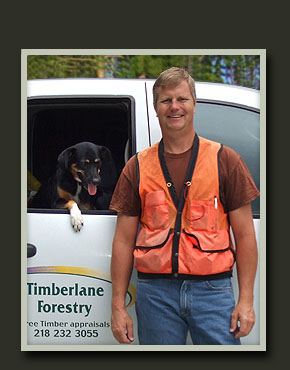
Don't buy blind. Erik Eggen provides independent pre-purchase timber and forest evaluations for properties in Crow Wing, Pine, Cass & Northern Minnesota counties.